
Bengaluru’s Property Pulse 2026: The New Rules for Buyers and Investors in India’s Real Estate Capital
Explore Bengaluru’s 2026 real estate market, uncovering emerging investment corridors, infrastructure developments, GCC expansion, employment-driven housing demand, and evolving property trends. Discover how connectivity, affordability, rental potential, and developer credibility are shaping opportunities for homebuyers and investors seeking sustainable long-term value across the city.
Bengaluru’s real estate market has entered 2026 with a more mature and selective growth story. Rather than being driven simply by speculation or the city’s technology reputation, property demand is increasingly being shaped by employment hubs, infrastructure connectivity, premiumisation, rental demand and the expanding footprint of Global Capability Centres (GCCs). For buyers and investors, this means the central question is no longer whether Bengaluru property will grow, but which locations, property formats and price segments are positioned to create sustainable value.
The latest market evidence points to continued momentum.
Cushman & Wakefield reported that Bengaluru recorded 12,544 residential launches in Q2 2026, representing annual growth of around 4%, while launches during the first half of the year crossed 25,000 units. The South submarket accounted for the largest share, followed by North and East Bengaluru. This indicates that the city's residential expansion is becoming increasingly distributed across multiple employment and infrastructure corridors.
A Market Moving from Rapid Growth to Selective Growth
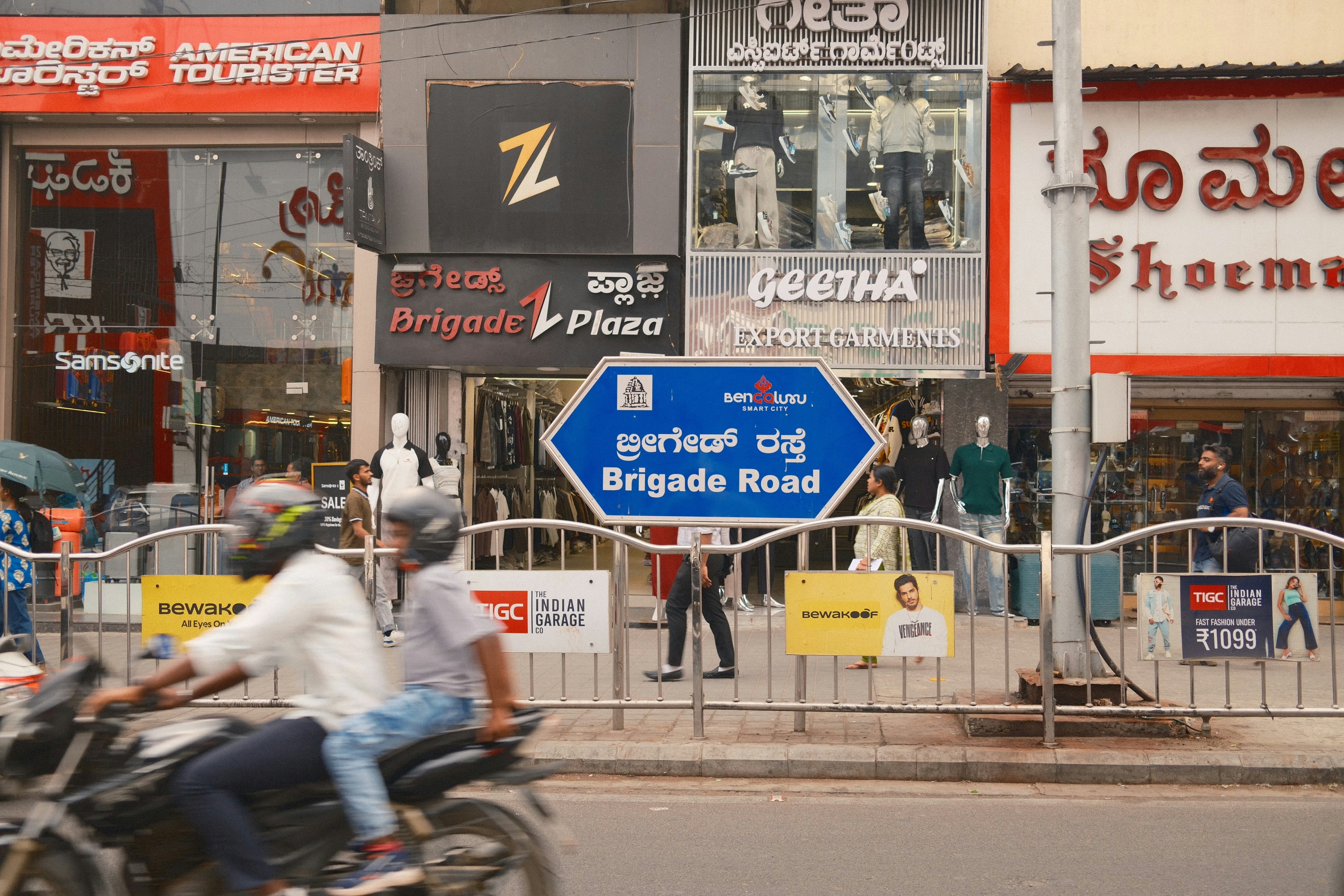
Bengaluru’s property market is no longer behaving like a single, uniform market. Mature locations with established employment centres, social infrastructure and strong connectivity are commanding a premium, while emerging corridors are attracting buyers looking for longer-term appreciation. This distinction is becoming particularly important in 2026 as affordability becomes a greater consideration for households.
Current market data suggests that premium housing remains resilient, but buyers are becoming more selective about what they are prepared to pay for. Property prices have risen significantly over recent years, making location, developer credibility, construction quality and possession timelines increasingly important considerations. The latest available market assessments also show that Bengaluru's residential market continues to benefit from strong underlying employment and migration fundamentals.
For investors, this creates a more nuanced opportunity. Simply buying in an area because it is labelled an “upcoming location” is unlikely to be sufficient. The stronger proposition is to identify areas where employment, transport, infrastructure and residential demand are developing together.
Technology and GCC Expansion Continue to Influence Housing Demand
One of Bengaluru’s greatest real estate advantages remains its position as India's leading technology and Global Capability Centre destination. This relationship between employment and housing is becoming even more significant in 2026.
India's GCC sector recorded a substantial increase in office leasing during the first half of 2026, with Bengaluru emerging as the country's leading market. Industry reporting indicates that GCC leasing across India reached approximately 16.5 million sq ft during H1 2026, up nearly 38% year on year, reinforcing Bengaluru's position as a major destination for multinational operations.
The effect extends well beyond commercial property. Employment concentration creates demand for homes, rental accommodation, retail, hospitality and supporting services. Corridors surrounding major technology clusters therefore have an important structural advantage. Whitefield, Outer Ring Road, Sarjapur Road, Electronic City and parts of North Bengaluru remain closely connected to this wider economic ecosystem, although their investment characteristics differ considerably.
Infrastructure Is Becoming a Property-Value Multiplier
Infrastructure remains one of the strongest forces reshaping Bengaluru's property geography. Metro expansion, road improvements, airport connectivity and the development of new employment corridors are changing the relative attractiveness of locations across the metropolitan region.
The Bengaluru Metro network continues to expand, with Phase 2A and 2B forming an important part of the city's future connectivity framework. BMRCL's official project information confirms the ongoing development of the metro network and its broader role in improving urban mobility.
For property buyers, however, infrastructure should not be viewed simply as a promise of future appreciation. The quality of the existing road network, actual commuting time, access to public transport and proximity to employment centres should be assessed alongside proposed projects. A property located close to functioning infrastructure can offer a different risk profile from one whose investment case depends almost entirely on an infrastructure project that is still years away.
North Bengaluru Is Becoming Increasingly Strategic
North Bengaluru deserves particular attention in the 2026 market because of the convergence of employment, airport-related development and large-scale infrastructure. Devanahalli and surrounding areas have attracted considerable developer and investor interest, while Hebbal and Thanisandra continue to benefit from their connection to established employment and residential ecosystems.
The opportunity in North Bengaluru is fundamentally a long-term one. Airport connectivity, commercial development and transport infrastructure can create a broader economic ecosystem rather than merely increasing residential supply. Yet investors should distinguish between genuinely connected projects and developments whose marketing relies heavily on future infrastructure.
The same principle applies to other growth corridors. A location can experience substantial construction activity without necessarily producing equivalent returns for every property. Land availability, competing supply, rental demand and the eventual concentration of employment must all be considered.
Whitefield, Sarjapur and Electronic City Represent Different Investment Stories
East and South-East Bengaluru continue to demonstrate the importance of established employment corridors. Whitefield has evolved from a peripheral technology district into one of the city's most important residential and commercial ecosystems. Its established infrastructure, office concentration and metro connectivity provide a relatively mature investment proposition.
Sarjapur Road presents a different story. Its appeal is closely linked to its proximity to technology and employment clusters, but its future performance depends heavily on infrastructure execution and the ability of civic infrastructure to keep pace with residential expansion.
Electronic City offers another proposition, particularly for buyers seeking comparatively accessible price points. Its established technology ecosystem and connectivity improvements provide a foundation for continued housing demand. These differences underline why investors should compare Bengaluru locations according to their individual economic drivers rather than treating the city as one homogeneous property market.
Commercial Real Estate Is Strengthening the Residential Story
Bengaluru's residential market cannot be separated from its office market. JLL's Q2 2026 assessment reported 5.8 million sq ft of new office supply, up 73% year on year, while office rents increased 0.7% quarter on quarter. Bengaluru also accounted for approximately one-third of India's Q2 office leasing activity.
This continued commercial activity has implications for residential investors. When companies expand their workforce or establish new operations, demand for nearby housing, rental accommodation and supporting infrastructure can follow. This is particularly relevant in Bengaluru, where commuting distance has a significant influence on residential decision-making.
The growth of flexible workspaces is another trend worth monitoring. Flexible offices accounted for 27% of India's office leasing during the first half of 2026, demonstrating how corporate occupation patterns are changing.

What Buyers Should Prioritise in 2026
For end-users, affordability and liveability should remain more important than short-term appreciation forecasts. A home may appear attractive because of its location or amenities, but the complete cost of ownership includes the purchase price, registration costs, maintenance, financing expenses and commuting costs.
Recent commentary also highlights an important shift in buyer thinking: purchasing a property is not automatically financially superior to renting. The decision should reflect income stability, intended holding period, financing costs and whether the property genuinely meets the buyer's lifestyle or investment objectives.
For investors, rental demand deserves equal attention. A property with strong tenant demand and sensible entry pricing may provide a more balanced investment proposition than a premium property whose returns depend entirely on future capital appreciation.
The New Bengaluru Investment Strategy
The Bengaluru property market of 2026 rewards research rather than speculation. The strongest opportunities are likely to emerge where employment growth, infrastructure, residential demand and urban development intersect. Established locations can provide stability, while carefully selected emerging corridors may offer longer-term appreciation potential.
The city's fundamentals remain compelling, but the market is becoming increasingly sophisticated. Investors should examine developer credibility, title and approvals, construction quality, actual connectivity, surrounding supply, rental potential and exit liquidity before committing capital. Buyers should also avoid assuming that every new launch will outperform an established property.
Bengaluru's real estate story in 2026 is therefore not simply about rising prices. It is about the changing geography of opportunity. As technology companies, GCCs, infrastructure projects and new communities reshape the city, property value is increasingly tied to the quality of the ecosystem surrounding an address.
For buyers and investors willing to look beyond headline prices and understand these underlying forces, Bengaluru remains one of India's most compelling real estate markets. The opportunity is still substantial, but the smartest investment in 2026 may not be the property with the loudest marketing. It may be the one positioned closest to the city's next generation of jobs, connectivity and sustainable urban growth.