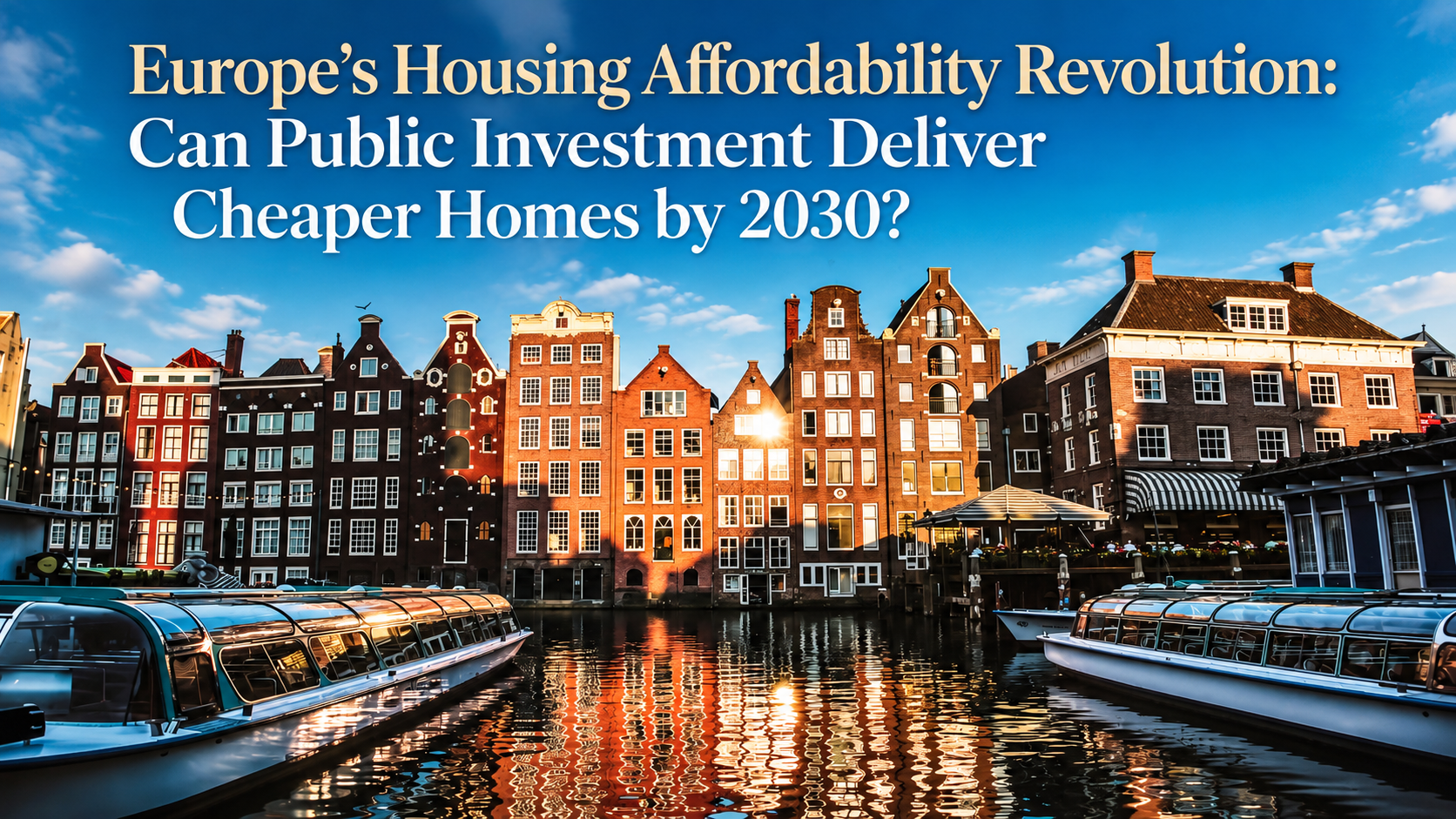
Europe’s Housing Affordability Revolution: Can Public Investment Deliver Cheaper Homes by 2030?
Europe’s housing crisis threatens economic competitiveness and social stability. The EU is investing in affordable housing, simplifying construction rules and encouraging public-private partnerships. However, success by 2030 depends on building more homes, controlling rents and ensuring long-term affordability for ordinary families.
Europe’s housing crisis is more than a problem about the property market. It has become a test of how competitive the economy is how stable society remains and how well governments can make sure ordinary families can afford a decent home. Because house prices, rents and construction costs keep putting strain on families the European Union is moving toward public investment, new housing rules and closer ties, with private investors. The big question is whether these steps will really give people affordable homes by 2030.

The challenge is huge. According to the European Commission house prices in the EU have gone up by than 60 per cent since 2013 and average rents have also gone up by about 20 per cent. Even though the situation is very different, in countries, big cities and areas that are seeing a lot of job growth are facing a lot of pressure. There is not housing available the land is expensive it costs more to get money for building and the process of getting permission to build takes a long time. All of these things are making it hard for building to catch up with the need.
The effects go beyond what people spend on their homes. When workers can't afford to live near where jobsre companies have trouble finding workers. Younger people wait longer to live on their cities might lose the people who keep things running. Because of this making housing affordable has become very important, for the economy. It connects building homes with people being able to move for work how well people work and the future of the economy.
The European Commission’s European Affordable Housing Plan is designed to tackle standing issues in the housing sector. It focuses on boosting the number of homes supporting the renovation of existing buildings making construction more efficient and promoting investment in homes that are affordable for people, with lower incomes. A key part of the plan is the proposed -European Housing Investment Platform. This platform is meant to bring public authorities and private investors. It also aims to make it easier for these parties to find financing options and work together. The Commission believes that Europe needs 150 billion euros each year to meet its housing needs. This amount is what they call the housing investment gap.
Financial support is also growing. The European Investment Bank Group has set a target of six billion euros to back sustainable housing by 2026. At the time EU cohesion funding and national contributions are being channeled into housing‑related projects. These efforts can give authorities, housing associations and developers the money they need for projects that would otherwise find it hard to get enough capital.
Investment alone will not guarantee property prices. Governments must make sure that funding actually leads to completed homes. It should not result in land values or cause delays in development. The European Commission’s recommendation from September 2026 focuses on speeding up planning approvals. It also promotes reusing buildings and using public land more effectively. The recommendation supports construction using modern and modular methods. It also backs the expansion of social housing in areas, with serious housing shortages.

These changes might make it cheaper to build homes and get houses built. There are still big problems. There aren't workers who know how to build properly. The materials cost a lot of money.There isn't enough roads or other basic facilities. Also governments have to think about protecting the environment while trying to get homes built quickly.
The future depends on how national governments can turn European funding into long‑term affordable housing programmes. Public‑private partnerships can bring in money but clear rules are essential to ensure that developments, with public support stay affordable for the households they are meant for. Stable rental housing, cooperative ownership and social housing can give people alternatives when they are priced out of property markets and affordable housing remains a vital alternative.
The OECD also has pointed out how important it is to expand housing and social housing to fix supply limits and to boost public investment. These methods could slow the rise in rents. Make it easier to get housing but the results will differ from one country to another and from one local market to another. By the year 2030 Europe may not see all homes become cheaper in the way especially in the cities that many people want to live in. Still if we keep adding homes give the right subsidies plan wisely and invest responsibly housing could become more affordable compared to what families earn.
In the end the success of Europe’s housing plan will not be judged by the billions of dollars promised. By the number of homes built the rents families can afford and the chances given to future generations. Government money can help steer the market in a direction; steady action will decide if that shift touches everyday people, across Europe.